Direct Answer: Grow brands on Instagram, Facebook, TikTok, YouTube, LinkedIn and WhatsApp: plan content that gets reach, build communities, work with creators, run Meta and TikTok ads that sell, measure results and turn the skill into a career.
Tuition Fee
100% Free
Duration & Workload
~10 Hours
Curriculum Depth
12 Chapters · 48 Lessons
Credential Awarded
Verified Certificate
12Chapters
Course outline
Understand what social media marketing can achieve for a business, how platform algorithms decide who sees each post, how organic and paid reach work together, and how social fits every stage from first awareness to repeat purchase.
What Social Media Marketing Is For12 min
How Platform Algorithms Decide What People See13 min
Organic Reach and Paid Reach13 min
The Social Media Marketing Funnel13 min
Build a social media strategy before posting: set goals and KPIs tied to business results, understand who your audience is and what they want, choose the platforms worth your time, and learn from competitors without copying them.
Setting Goals and KPIs for Social13 min
Knowing Your Audience13 min
Choosing the Right Platforms13 min
Competitor Research on Social13 min
Learn how to win on each major platform: Instagram's formats and features, Facebook Pages and Groups, short video on TikTok and YouTube Shorts, and LinkedIn for B2B companies and personal brands.
Instagram for Brands13 min
Facebook Pages and Groups13 min
TikTok and YouTube Shorts for Reach13 min
LinkedIn for B2B and Personal Brands13 min
Plan content that stays on strategy: define content pillars and formats, build a calendar that a team can follow, write hooks, captions and calls to action that work, and use hashtags and keywords for social search.
Content Pillars and Formats13 min
Building a Content Calendar13 min
Hooks, Captions and Calls to Action13 min
Hashtags, Keywords and Social Search12 min
Produce good content without a big team: design consistent posts with Canva and templates, plan short videos with scripts and shot lists, collect and reuse customer content with permission, and use AI tools while keeping your brand voice.
Designing Posts With Canva and Templates13 min
Scripts and Shot Lists for Short Videos13 min
User-Generated Content and Reposts13 min
Using AI Tools Without Losing Your Voice12 min
Turn conversations into loyalty and sales: manage comments and DMs with clear response standards, use WhatsApp Business for orders and support, handle complaints and negative comments calmly in public, and build a community that keeps coming back.
Comments, DMs and Response Times13 min
WhatsApp Business for Sales and Support13 min
Handling Complaints and Negative Comments13 min
Building an Engaged Community13 min
Work with creators the way experienced brands do: find creators whose audiences match yours, write briefs and agreements that protect both sides, run and measure campaigns properly, and follow disclosure rules that keep everyone honest.
Finding the Right Creators13 min
Briefs, Contracts and Pricing13 min
Running and Measuring Creator Campaigns13 min
Disclosure Rules and Brand Safety12 min
Run social ads that pay for themselves: understand how Meta Ads Manager is organised, build audiences for prospecting and retargeting, create ad creative that converts, and manage budgets, testing and campaigns on TikTok and LinkedIn.
How Meta Ads Manager Is Structured14 min
Audiences, Targeting and Retargeting13 min
Ad Creative That Converts13 min
Budgets, Testing and Ads on TikTok and LinkedIn13 min
Prove what social media achieves: read platform insights and focus on the metrics that matter, track sales with UTM links, understand pixels, the Conversions API and the limits of attribution, and write monthly reports clients actually understand.
Platform Insights and the Metrics That Matter13 min
UTM Links and Tracking Sales13 min
Pixels, Conversions API and Attribution Limits13 min
Monthly Reports Clients Understand12 min
Turn attention into revenue: sell directly through Instagram, Facebook and WhatsApp, generate leads with forms and messages, plan seasonal campaigns for Ramadan, Eid and sale events, and build the trust that makes cash on delivery customers order and accept parcels.
Selling Through Instagram, Facebook and WhatsApp13 min
Lead Generation With Forms and Messages12 min
Seasonal Campaigns for Ramadan, Eid and Sale Events13 min
Trust Signals and Cash on Delivery13 min
Protect the brands you manage: respond to a social media crisis with a clear plan, secure accounts against hacking and avoid policy bans, reject fake followers and misleading tactics, and make content accessible and inclusive for everyone.
Social Media Crisis Management13 min
Account Security and Platform Policies13 min
Fake Followers, Engagement Pods and Misleading Claims12 min
Accessible and Inclusive Content13 min
Turn your skills into income: understand what social media managers actually do and how the role grows, build a portfolio with real case studies, find freelance and agency work from Pakistan, and price, pitch and keep clients for the long term.
The Social Media Manager Role13 min
Building a Portfolio and Case Studies13 min
Freelancing and Agency Work From Pakistan13 min
Pricing, Proposals and Keeping Clients13 min
Final exam & certificate
01
Topic checks
Each one opens the next topic
02
Chapter quizzes
Each one opens the next chapter
03
50-question final
50 of 100 marks to pass
04
Certificate
Issued instantly, verifiable
One attempt, 60 minutes. If you don't pass, you can retake once after 30 days.
The course guide
How to become a social media manager, step by step
16 October 2026 · 10 min read
To become a social media manager, learn how platforms decide who sees a post, learn to plan and make content that serves a business goal, learn to run basic Meta ads, and learn to measure and report results in plain language. Then prove it with two or three small case studies, ideally for real businesses. Nobody asks a social media manager for a degree first. They ask what you grew, by how much, and how you know.
This guide walks through the skills in the order that makes sense, how to build a portfolio when you have no clients, where the first work tends to come from in Pakistan, and what our free Social Media Marketing course covers chapter by chapter.
What a social media manager actually does
The real job is wider than posting on Instagram. In a small business or as a freelancer, one person usually covers all of this. In an agency or large brand, these become separate roles.
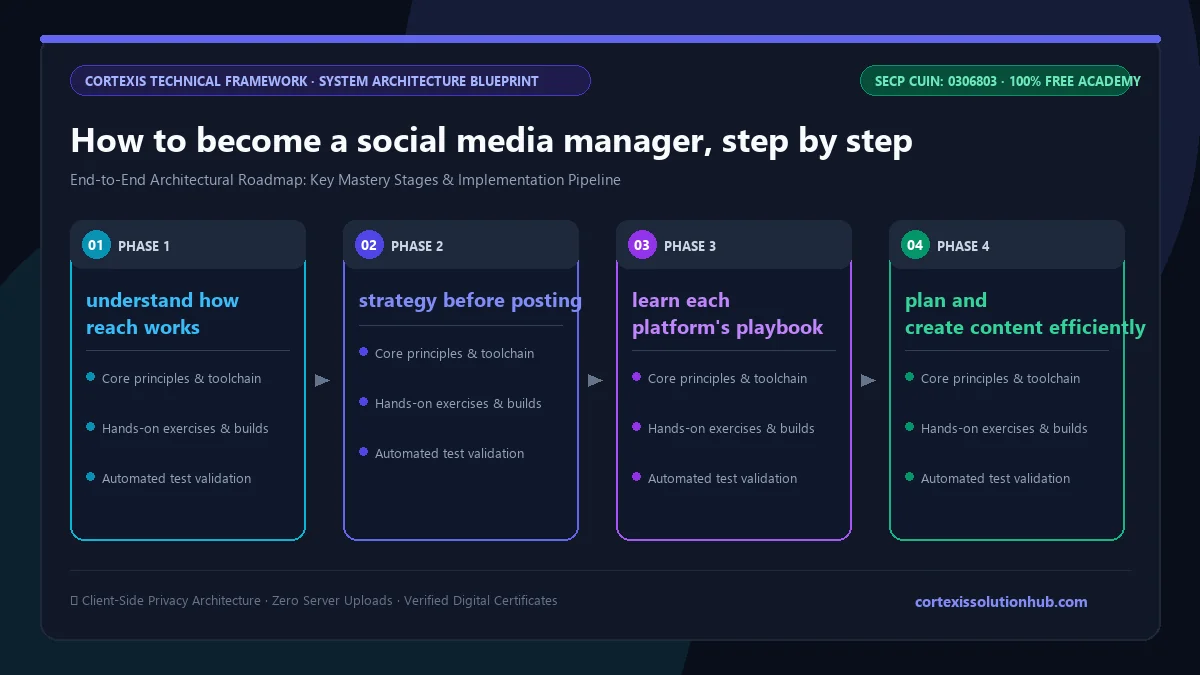
Figure 1: Complete step-by-step architectural workflow and technical execution stages for How to become a social media manager, step by step.
How to become a social media manager: the skills, in order
Each step builds on the one before. Skipping straight to ads or growth hacks wastes months.
Step 1: understand how reach works
Learn what signals platforms reward. Shares, saves, sends and watch time tell a platform that people valued a post. Learn the difference between organic reach and paid reach, and how the two work together.
Step 2: strategy before posting
Set one primary goal per campaign: awareness, leads, sales, customer service or loyalty. Tie it to a number the business cares about, not just followers or likes. Research the audience, pick the two or three platforms where they actually are, and study competitors without copying them.
Step 3: learn each platform's playbook
Instagram, Facebook Pages and Groups, TikTok, YouTube Shorts and LinkedIn each reward different things. A clothing brand in Lahore and a B2B software house in Islamabad need different plans.
Step 4: plan and create content efficiently
Define content pillars, build a calendar someone else could follow, and practise writing hooks, captions and calls to action. Learn Canva templates for consistent graphics, and scripts and shot lists for short videos so you are not improvising on camera.
Step 5: community management and WhatsApp
In Pakistan a large share of social selling ends in a DM or a WhatsApp chat, often with cash on delivery. Learn response standards, saved replies, WhatsApp Business catalogues and away messages, and how to handle a negative comment calmly in public.
Step 6: paid social
Learn how Meta Ads Manager is organised into campaigns, ad sets and ads, how to build prospecting and retargeting audiences, and how to test creative with a sensible budget.
Step 7: measurement and reporting
Use UTM links and a simple order source sheet so you can connect posts to sales. Understand what the pixel and Conversions API do, and why platforms all tend to claim the same sale. Then write a monthly report a busy owner can read in two minutes. This is the skill that keeps clients.
Building a portfolio with no experience
A portfolio matters more than certificates here. The strongest ones show results, not just nice looking posts. Aim for two to four short case studies, each written like this:
Client and challenge. "Home bakery, orders depended on word of mouth."
Strategy. The pillars, the posting plan, the WhatsApp ordering link, any small ad budget.
Results over a defined period. Real numbers from the account's insights.
What you learned. One honest lesson, such as which format drove the most enquiries.
If you have no clients yet, you still have options:
Grow your own niche account on something you know, like cooking, cricket or study tips, and document what happened.
Help a small local business, perhaps a relative's shop, in return for a testimonial and permission to show the results.
Volunteer for a non-profit or student society. They usually need help and will let you show the work.
Do a spec project for a real brand, clearly labelled as a concept and not client work.
Where the first work comes from in Pakistan
There are a few common routes, and many people combine them:
Route
What it looks like
Agency job
An executive role at a digital agency in Lahore, Karachi or Islamabad, working across several brands
In-house role
A social media executive at one brand, startup, university or NGO
Freelance marketplaces
Packages on Upwork or Fiverr, such as monthly management or Meta ads for an online store
Direct clients
Local businesses found through referrals, LinkedIn and Instagram
Agencies are a good place to start because you see many industries quickly. Entry titles include Social Media Executive, Social Media Assistant, Content Coordinator and Community Moderator. If you go freelance, pick a niche you can name, like "Instagram and Meta ads for clothing brands" or "social media for restaurants". Our guide on how to start freelancing in Pakistan covers profiles and getting paid.
On pricing, we will not quote a figure, because rates vary hugely by client, market and scope. What matters more is writing the scope down: platforms, number of posts and Reels, response hours, revision rounds, reporting and whether ads are included. Keep the client paying ad spend directly to the platform, and your fee separate.
Mistakes that hold beginners back
Reporting followers and likes alone. They look good and prove little. Pair them with a metric connected to the goal, like enquiries or orders.
Buying followers. Inactive followers drag down engagement and ruin your audience data. Never do it, even when a client asks.
Ignoring messages. Slow replies on comments and DMs lose sales, especially for cash on delivery businesses.
Sharing one password with everyone. Use two factor authentication and proper access roles, and make sure the client always keeps admin access to their own Page.
Promising viral results. Nobody controls virality. Promise a process and honest reporting.
What the free Social Media Marketing course covers
The Social Media Marketing course is rated Beginner to Intermediate and planned as six weeks. It has 12 chapters and 48 lessons, roughly ten hours of reading, with examples drawn from Pakistani businesses throughout.
Chapter
What you learn
1. How Social Media Marketing Works
What it can and cannot do, how algorithms decide who sees a post, organic and paid reach, the funnel
2. Strategy and Audience
Goals and KPIs, knowing your audience, choosing platforms, competitor research
3. Platform Playbooks
Instagram, Facebook Pages and Groups, TikTok and YouTube Shorts, LinkedIn for B2B and personal brands
4. Content Strategy and Planning
Content pillars and formats, a content calendar, hooks, captions and CTAs, hashtags and social search
5. Creating Content Efficiently
Canva and templates, scripts and shot lists, user generated content, AI tools without losing your voice
6. Community Management and Customer Care
Comments, DMs and response times, WhatsApp Business, complaints, building a community
7. Influencer and Creator Marketing
Finding creators, briefs, contracts and pricing, measuring campaigns, disclosure rules
8. Paid Social Advertising
Meta Ads Manager structure, audiences and retargeting, ad creative, budgets and testing, TikTok and LinkedIn ads
9. Measuring Results
Platform insights, UTM links, pixels and the Conversions API, monthly reports
10. Social Selling and Campaigns
Selling through Instagram, Facebook and WhatsApp, lead forms, Ramadan and Eid campaigns, trust and cash on delivery
11. Reputation, Risk and Ethics
Crisis management, account security and policies, fake followers and misleading claims, accessible content
12. Careers in Social Media Marketing
The manager role, portfolios and case studies, freelancing and agency work from Pakistan, pricing and proposals
Every lesson ends with a short quiz, and each chapter ends with a chapter quiz you need to pass before the next chapter opens.
Who it is for, and how long it takes
It suits students who want an agency or in-house role, people who want to freelance, and small business owners who sell through Instagram and WhatsApp and want to do it properly. You do not need design or coding skills.
The reading itself is about ten hours, so the planned six weeks leaves room to practise each chapter on a real account as you go. Start your practice account or business in week one, not after you finish, because the portfolio is what takes time.
After you complete every lesson and pass every chapter quiz, the final exam opens: 50 questions, 60 minutes, and a pass mark of 50 out of 100. You get one timed attempt. If you do not pass, a retake opens 30 days later with the questions in a new order and the options shuffled. Leaving the page submits the exam, so pick a quiet hour. Pass, and the certificate is issued free.
It is not a Meta Blueprint certification, and no certificate replaces a portfolio with results in it.
Ready to start? Open the free Social Media Marketing course, pick one account or business to practise on, and work through chapter 1 this week.
Questions, answered
05 questions
Yes. Most people start without paid experience by growing their own niche account, helping a small local business or doing a clearly labelled spec project. What employers and clients want to see is evidence that you can plan, create and measure, not years on a CV.
No degree is required for most roles. Clear writing in English and Urdu, platform knowledge, basic ads skills and a portfolio with real results matter far more.
Learn Instagram and Facebook first, along with Meta Ads Manager and WhatsApp Business, because many Pakistani businesses sell through them. Add TikTok, YouTube Shorts or LinkedIn depending on the clients you want.
The free course is planned as six weeks. Becoming job ready usually takes longer, because you need a few months of results to put in your case studies.
It is one of the more accessible ones, with clients in Pakistan and abroad hiring for account management, content packages and Meta ads. A clear niche and written scope make it far easier to win and keep clients.