Direct Answer: Build and run Shopify stores and manage Amazon Seller Central like a professional virtual assistant: products, listings, keyword research, PPC, inventory, customer service and the reporting clients pay for.
Tuition Fee
100% Free
Duration & Workload
~10 Hours
Curriculum Depth
12 Chapters · 48 Lessons
Credential Awarded
Verified Certificate
12Chapters
Course outline
Understand the main e-commerce business models, how Shopify and Amazon differ, what e-commerce virtual assistants do day to day, and the practical realities of selling and working from Pakistan.
E-commerce Business Models13 min
The Shopify and Amazon Ecosystems13 min
What an E-commerce Virtual Assistant Does13 min
Selling and Working From Pakistan13 min
Set up a Shopify store with the right plan, domain and settings, customise a theme with the theme editor, build pages, menus and policies, and choose apps carefully so the store stays fast.
Setting Up a Store: Plans, Domain and Settings13 min
Themes and the Theme Editor13 min
Pages, Navigation and Store Policies12 min
Choosing Apps Without Bloating the Store12 min
Add products with correct variants, prices and inventory, write descriptions and prepare photos that sell, organise the catalogue with collections, tags and metafields, and edit many products at once with the bulk editor and CSV imports.
Adding Products, Variants and Inventory14 min
Product Photos and Descriptions That Sell13 min
Collections, Tags and Metafields13 min
Bulk Editing and CSV Imports12 min
Set up payment methods and a smooth checkout, configure shipping zones and rates, process orders, refunds and returns correctly, and handle taxes, currencies and international customers.
Payment Gateways and Checkout13 min
Shipping Zones, Rates and Fulfilment13 min
Processing Orders, Refunds and Returns13 min
Taxes, Currencies and Selling Internationally13 min
Navigate Seller Central and monitor account health, understand ASINs, SKUs, variations and the featured offer, compare FBA with FBM, and follow the Amazon policies that protect a seller's account.
A Tour of Seller Central and Account Health13 min
Listings: ASINs, SKUs and Variations14 min
FBA Versus FBM13 min
Amazon Policies Every VA Must Know13 min
Find products with genuine demand and room to compete, use research tools like Helium 10, Jungle Scout and Keepa, analyse competitors and reviews for opportunities, and work with suppliers while calculating real profit.
Finding Products With Real Demand13 min
Research Tools: Helium 10, Jungle Scout and Keepa13 min
Competitor and Review Analysis12 min
Suppliers, Samples and Profit Calculations13 min
Research the keywords Amazon shoppers use, write titles, bullet points and descriptions that rank and convert, use backend search terms and A+ Content, and create images that follow Amazon's rules and sell.
Keyword Research for Amazon14 min
Titles, Bullet Points and Descriptions13 min
Backend Search Terms and A+ Content13 min
Product Images and Image Rules13 min
Understand how Sponsored Products ads and auctions work, structure automatic and manual campaigns, read ACoS, ROAS and TACoS correctly, and optimise with bids, keyword harvesting and negative keywords.
How Sponsored Products Work13 min
Campaign Structure: Automatic and Manual13 min
ACoS, TACoS and Reading Reports14 min
Bids, Negative Keywords and Optimisation12 min
Plan stock so products never run out or pile up, prepare and send shipments to FBA correctly, manage returns, removals and stranded inventory, and coordinate freight, customs and suppliers.
Inventory Planning and Restocking13 min
Sending Shipments to FBA14 min
Returns, Removals and Stranded Inventory13 min
Freight, Customs and Supplier Coordination12 min
Answer customer messages quickly and within the rules, understand the difference between reviews and seller feedback, handle negative reviews, returns and A-to-z claims calmly, and create a customer experience on Shopify that earns loyalty.
Answering Customer Messages13 min
Reviews, Ratings and Feedback Rules13 min
Negative Reviews, Returns and A-to-z Claims13 min
Customer Experience on Shopify Stores12 min
Bring visitors to a Shopify store through search engine optimisation and content, build email and SMS flows with proper consent, support social and paid ads, and increase the share of visitors who buy.
Shopify SEO and Content13 min
Email and SMS Marketing13 min
Social Media and Paid Ads for Stores12 min
Conversion Rate Optimisation13 min
Choose the services clients pay for, build a portfolio and profile that win e-commerce VA work, handle account access and security professionally, and keep clients long term with SOPs and clear reporting.
Skills and Services Clients Hire For12 min
Building a VA Portfolio and Profile13 min
Access, Permissions and Security13 min
SOPs, Reporting and Long-Term Clients13 min
Final exam & certificate
01
Topic checks
Each one opens the next topic
02
Chapter quizzes
Each one opens the next chapter
03
50-question final
50 of 100 marks to pass
04
Certificate
Issued instantly, verifiable
One attempt, 60 minutes. If you don't pass, you can retake once after 30 days.
The course guide
How to become an Amazon virtual assistant: a free roadmap
16 October 2026 · 10 min read
To become an Amazon virtual assistant, learn how Seller Central works, get good at three or four tasks sellers hand over every week (listings, customer messages, inventory and PPC reports), build a small portfolio from practice work, and then pitch sellers with a specific audit of their listing instead of a generic "I am a hard worker" message. You do not need capital, a product or your own seller account. You need careful habits, clear written English and a laptop with reliable internet and power backup.
This guide walks through what the job really involves, a learning plan you can follow in about six weeks, the mistakes that get new VAs fired, and how our free E-commerce: Shopify & Amazon Virtual Assistant course covers each step.
What an Amazon virtual assistant actually does
A VA works inside a seller's business remotely. The seller owns the brand and the money; you keep the daily machine running so they can think about products and growth. The work usually falls into these areas:
Area
Typical tasks
Listings
Creating and updating titles, bullet points, descriptions, images and variations
Product research
Checking demand and competition for new product ideas
Checking metrics and policy notifications before they become problems
Reporting
A short daily or weekly summary of sales, ads and stock
For a US seller, the time zone gap works in your favour: you answer overnight messages and check account health in your morning, and the seller wakes up to an inbox that has already been handled.
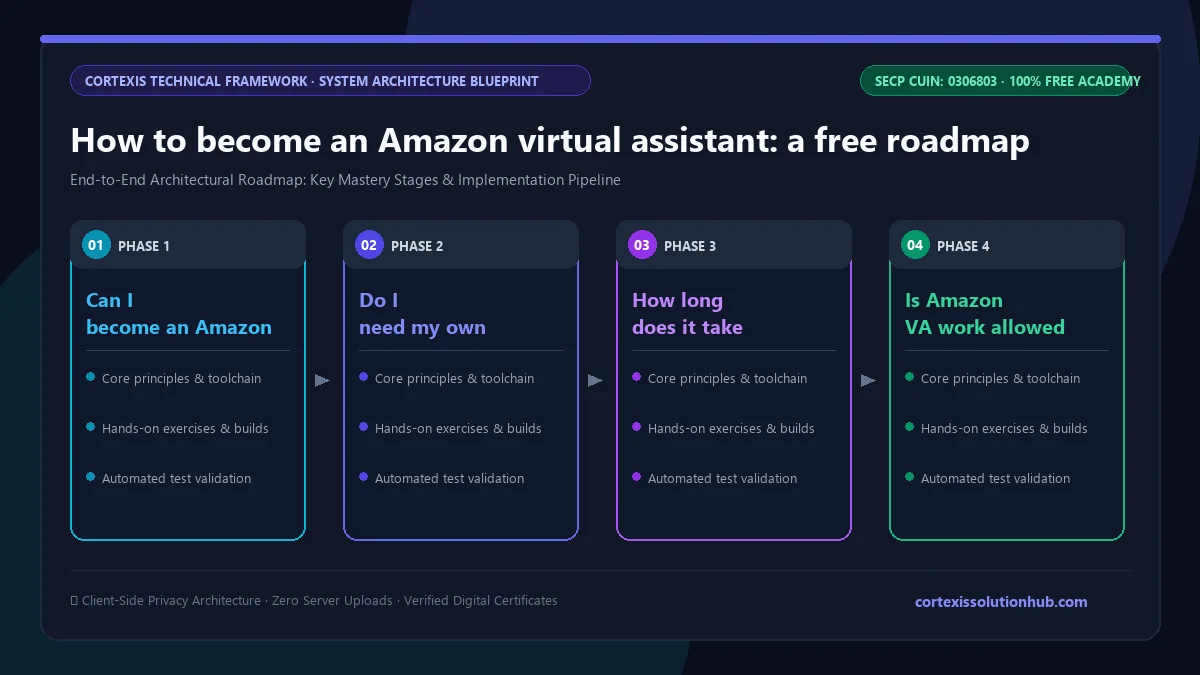
Figure 1: Complete step-by-step architectural workflow and technical execution stages for How to become an Amazon virtual assistant: a free roadmap.
Generalist first, specialist later
Start as a generalist for one or two small sellers; it is the fastest way to learn how the pieces connect. Once you have real client work behind you, specialise in what you do best. PPC and listing optimisation are popular specialisms because their results are easy to measure.
The skills you need before you pitch anyone
None of these require a degree, but every one of them gets tested in your first month with a client.
Attention to detail. A wrong price, a missing variation or a typo in a bullet point costs sales and can trigger policy problems.
Clear written English. Listings, customer replies and reports are all writing. If this is your weak spot, our guide on how to improve business English is a good place to start.
Spreadsheets. Inventory plans, ad reports and profit calculations all live in Excel or Google Sheets. You should be comfortable with formulas, sorting, filtering and pivot tables. The free Excel & Business Analytics course covers this.
Platform knowledge. Seller Central, the difference between FBA and FBM, ASINs and SKUs, and the policies that protect an account.
Judgement. A small replacement for a damaged item is usually your call; a legal threat or a large refund is not.
A 6 week plan to become an Amazon virtual assistant
The course is designed to take about six weeks at a steady pace, with roughly ten hours of reading across 48 lessons, plus the quizzes and your own practice. Here is how that time maps onto the job.
Week
Focus
What you should be able to do by the end
1
How e-commerce works, building a Shopify store
Explain a client's business model and set up a store end to end
2
Shopify products, payments, shipping and orders
Add variants, run bulk CSV edits, process refunds and returns
3
Seller Central foundations and product research
Read account health, compare FBA and FBM, judge a product idea
4
Listing optimisation and Amazon PPC
Write a keyword-led listing and structure auto and manual campaigns
5
Inventory, logistics and customer service
Calculate days of cover, plan a shipment, answer a claim within the rules
6
Store marketing and working as a VA
Package your services, build a portfolio, handle client access safely
Every week, produce one piece of work you could show a client.
How E-commerce Works. Business models (dropshipping, private label, wholesale, arbitrage, print on demand, handmade), how Shopify and Amazon differ, what a VA does day to day, and the realities of selling and working from Pakistan.
Building a Shopify Store. Plans, domain and settings, themes and the theme editor, pages, navigation and policies, and choosing apps without slowing the store down.
Products and Collections on Shopify. Variants and inventory, photos and descriptions, collections, tags and metafields, and bulk editing with CSV imports.
Payments, Shipping and Orders. Gateways and checkout, shipping zones and rates, refunds and returns, taxes, currencies and international customers.
Amazon Seller Central Foundations. Account health, ASINs, SKUs and variations, FBA versus FBM, and the policies every VA must know.
Product Research and Sourcing. Finding real demand, using Helium 10, Jungle Scout and Keepa, competitor and review analysis, suppliers, samples and profit calculations.
Listing Optimisation and Amazon SEO. Keyword research, titles, bullets and descriptions, backend search terms and A+ Content, and image rules.
Amazon PPC Advertising. How Sponsored Products auctions work, automatic and manual campaign structure, ACoS, ROAS and TACoS, bids and negative keywords.
Inventory, Fulfilment and Logistics. Restock planning, sending shipments to FBA, returns, removals and stranded inventory, freight, customs and suppliers.
Customer Service and Reviews. Answering messages within the rules, reviews versus seller feedback, negative reviews and A-to-z claims, and customer experience on Shopify.
Store Marketing and Conversion. Shopify SEO, email and SMS flows with proper consent, social and paid ads, and conversion rate optimisation.
Working as an E-commerce VA. The services clients hire for, building a portfolio and profile, access and security, and SOPs and reporting that keep clients long term.
The running examples, a handmade khussa brand in Lahore on Shopify and a US kitchen tools brand on Amazon managed by a VA in Multan, keep it grounded in real work.
Build a portfolio without having clients
The classic trap is "no clients without experience, no experience without clients." Practice work breaks it, as long as you label it honestly.
Listing rewrite. Pick a real public listing, write a better title, five bullets and backend terms, and show before and after.
Keyword research sheet. Research one niche and present a clean list grouped by relevance.
Product research report. Demand, competition, a profit estimate and a clear recommendation.
PPC structure plan. Campaign names, match types and targets for a sample product.
Shopify demo store. A small store with products, collections and real policies.
Customer service templates. Polite, policy-compliant replies for the five most common situations.
Inventory planner. A spreadsheet that calculates days of cover and reorder points.
Finding your first client
E-commerce VA work is posted on Upwork, Fiverr, LinkedIn, Facebook groups for Amazon sellers and specialist job boards. A few things separate the proposals that get replies:
A specific headline. "Amazon Listing and PPC Assistant" beats "Virtual Assistant".
Proof you looked. Open the client's listing and name one concrete problem, such as a keyword the top competitors use in their titles that this listing is missing.
Packages, not vague hours. "Listing optimisation: keyword research, new title, five bullets, backend terms, image brief, delivered in five working days" is easy for a client to say yes to.
Making changes without approval. Price changes, deleted listings and large refunds should always be agreed first.
Using a VPN to "look American". Log in honestly from your own location with your own user account. Disguised logins look suspicious and can trigger security checks on the client's account.
Sharing or reusing logins. Ask for your own user permissions, keep unique passwords in a password manager and turn on two-step verification.
Trusting old videos over official help pages. Rules change, and outdated tactics risk the account.
Going quiet. A short daily summary, even when nothing went wrong, is what keeps clients for years.
Leaving messily. When a contract ends, ask the client to remove your access, confirm it, and return or delete files.
How the free certificate works
Every lesson unlocks its check after you have spent time reading it, and you pass each check to move on. The course ends with a final exam: 50 questions, 60 minutes, and a pass mark of 50 out of 100. You get one timed attempt. If you do not pass, one retake opens 30 days later, with the same questions in a new order and the options shuffled. Leaving the page submits the exam, so choose a quiet hour. Pass, and the certificate is issued free.
A certificate shows you finished a structured course and passed a timed exam; it does not replace client results. We wrote more about this in are free online certificates worth anything. In this field, what wins work is a sharp portfolio and the first client who is happy to leave a review.
Questions, answered
05 questions
Yes. Most VAs start with no client history. Learn the platform, build three to five honest practice samples, and begin with smaller tasks such as listing updates or customer messages.
No. You can learn Seller Central concepts, research tools and listing writing without one, and practise on public listings. When you work for a client, they give you your own user permissions inside their account.
The free course is built for about six weeks at a steady pace. Landing a first client depends on your portfolio and how many targeted proposals you send, so plan for some weeks of applying after you finish.
Working remotely for international sellers from Pakistan is common, and you receive payment through freelance platforms or official banking channels. Follow each platform's rules, keep records of your income, and register for tax as your earnings grow.
Both. Many brands sell on Amazon and run a Shopify store, so Shopify skills open a second pool of clients. The course covers both.
Ready to start? Open the free [E-commerce: Shopify & Amazon Virtual Assistant course](/learn/ecommerce-shopify-amazon-va), work through one chapter at a time, and turn each week into a portfolio piece you can send to your first client.