Direct Answer: Run projects with confidence: charters, scope, schedules, budgets, risk and communication, then Agile, Scrum and Kanban sprint by sprint, the tools teams use, leading people, and a clear path to CAPM, PMP and PSM I.
Tuition Fee
100% Free
Duration & Workload
~11 Hours
Curriculum Depth
12 Chapters · 48 Lessons
Credential Awarded
Verified Certificate
12Chapters
Course outline
Learn what separates a project from everyday operations, what a project manager actually does, how scope, time and cost pull against each other, and how the PMBOK Guide and the Scrum Guide serve as your two main references.
Projects, Operations and Programs12 min
The Project Manager Role and Accidental PMs13 min
The Triple Constraint and Trade-Offs13 min
The PMBOK Guide and the Scrum Guide as References12 min
Compare predictive, iterative, incremental, agile and hybrid lifecycles, see where each one fits, and learn how to choose and explain an approach that suits your project rather than following fashion.
Predictive Waterfall Lifecycles13 min
Iterative and Incremental Delivery13 min
Agile Lifecycles and When They Fit13 min
Choosing a Hybrid Approach14 min
Learn how organisations decide which projects are worth doing, how to write a project charter that authorises your work, how to find and map the people who can make or break the project, and how to run a kickoff meeting that sets everyone off in the same direction.
Business Cases and Project Selection13 min
Writing a Project Charter13 min
Identifying and Mapping Stakeholders13 min
The Kickoff Meeting12 min
Gather and document requirements, write a scope statement that says clearly what is and is not included, break the work into a work breakdown structure, and keep scope under control with a simple, fair change request process.
Gathering and Documenting Requirements13 min
Writing a Scope Statement13 min
Building a Work Breakdown Structure14 min
Controlling Scope Creep and Change Requests13 min
Turn your work breakdown structure into a realistic schedule by estimating effort and duration, linking activities through dependencies, finding the critical path, and presenting it as a Gantt chart with milestones you can defend.
Estimating Effort and Duration13 min
Dependencies and Network Diagrams13 min
Finding the Critical Path14 min
Gantt Charts, Milestones and Schedule Compression13 min
Build a cost estimate from your work breakdown structure, set aside the right reserves for risk, and use earned value to see in plain numbers whether a project is ahead or behind on both cost and schedule.
Building a Cost Estimate and Budget13 min
Contingency and Management Reserves12 min
Earned Value Basics: PV, EV and AC14 min
Reading CPI, SPI and Forecasts14 min
Find and rank the risks that could hurt or help your project, plan responses and track them in a risk register, define quality and acceptance criteria up front, and keep stakeholders informed with a communication plan and clear status reports.
Identifying and Assessing Risks13 min
Risk Responses and the Risk Register13 min
Quality Planning and Acceptance Criteria13 min
Communication Plans and Status Reports13 min
Learn the four values and twelve principles of the Agile Manifesto and what they look like in real work, then write user stories with clear acceptance criteria and size them with relative estimation and story points.
The Agile Manifesto and Its Four Values13 min
The Twelve Agile Principles in Practice14 min
User Stories and Acceptance Criteria13 min
Relative Estimation With Story Points14 min
Learn the theory behind Scrum, the three accountabilities on a Scrum Team, the three artifacts and the commitment that belongs to each, exactly as the Scrum Guide describes them.
Scrum Theory: Empiricism and the Scrum Values13 min
The Scrum Team: Product Owner, Scrum Master and Developers14 min
Product Backlog, Sprint Backlog and Increment13 min
Commitments: Product Goal, Sprint Goal and Definition of Done13 min
Run each Scrum event well, from Sprint Planning and the Daily Scrum to the Sprint Review and Retrospective, and use backlog refinement, velocity and burndown charts to keep forecasts honest.
Sprint Planning13 min
The Daily Scrum13 min
Sprint Review and Sprint Retrospective14 min
Product Backlog Refinement, Velocity and Burndown Charts14 min
Manage flow with Kanban boards and WIP limits, then learn how teams run projects in Jira, Trello, Asana and plain spreadsheets, and how to choose the right tool for your team and budget.
Kanban Boards, WIP Limits and Flow13 min
Running Projects in Jira14 min
Trello and Asana for Smaller Teams13 min
Spreadsheets, Templates and Choosing a Tool13 min
Lead and motivate a project team, handle conflict and difficult stakeholders, close a project properly with lessons learned, and plan a realistic route to the CAPM, PMP or PSM I certification.
Leading and Motivating a Project Team13 min
Handling Conflict and Difficult Stakeholders14 min
Closing a Project and Capturing Lessons Learned13 min
Certification Paths: CAPM, PMP and PSM I14 min
Final exam & certificate
01
Topic checks
Each one opens the next topic
02
Chapter quizzes
Each one opens the next chapter
03
50-question final
50 of 100 marks to pass
04
Certificate
Issued instantly, verifiable
One attempt, 60 minutes. If you don't pass, you can retake once after 30 days.
The course guide
How to become a project manager with no experience
16 October 2026 · 10 min read
You can become a project manager with no experience, but not by applying for "Project Manager" jobs on day one. The realistic route is to learn the core skills (scope, schedules, budgets, risk, communication, then Agile and Scrum), run small projects inside the job you already have, write those projects down as evidence, and only then add an entry-level certificate such as CAPM or PSM I. Most project managers start as accidental ones: the coordinator, team lead or founder who was handed a deadline. Our free Project Management: Agile, Scrum & PMP Basics course is written for exactly that person.
What a project manager actually does
A project is temporary work that creates something unique: opening a second branch, launching an app, moving an office. Running the daily orders is operations, not a project. The project manager is the person accountable for the whole thing coming together, not the person who does every task.
In practice the job is mostly communication: making sure everyone knows what is being delivered and why, fitting the work to the time and money available, getting decisions made, spotting problems early and keeping expectations realistic. You often have little formal authority, so you lead through clarity and reliability rather than rank.
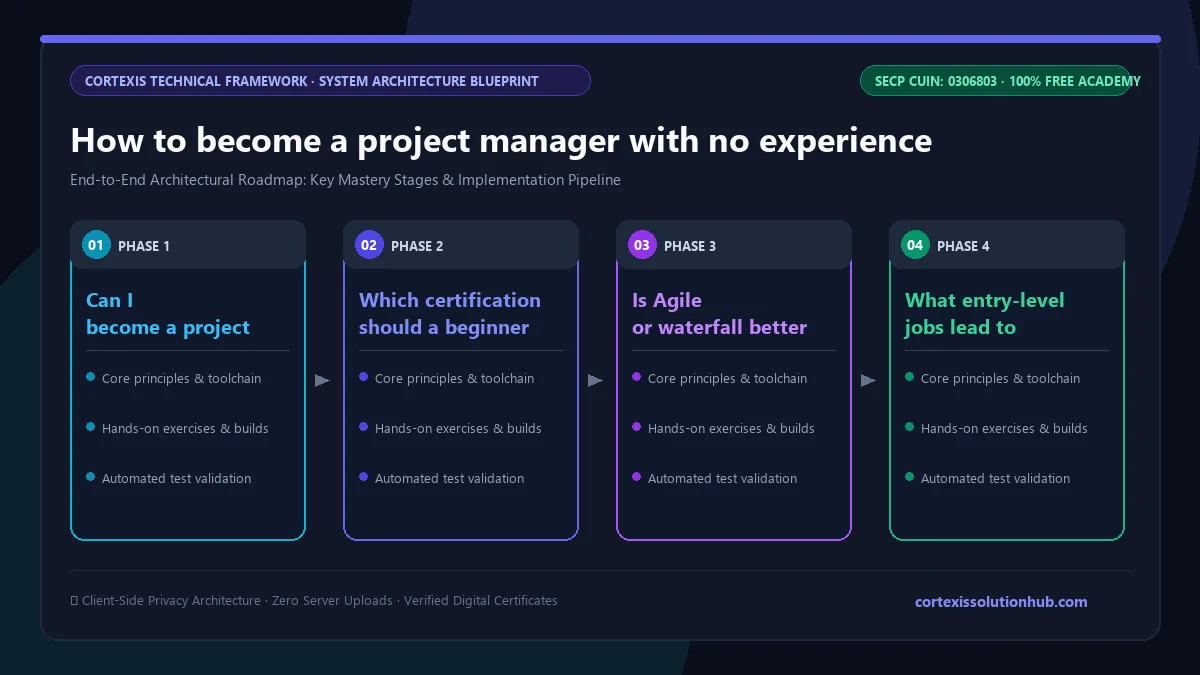
Figure 1: Complete step-by-step architectural workflow and technical execution stages for How to become a project manager with no experience.
How to become a project manager with no experience: the roadmap
Learn in this order; each stage is usable on a real project straight away.
Stage
What you learn
You can move on when
1. Foundations
Projects vs operations, the PM role, scope, time and cost trade-offs
You can explain why a project is not "just a big task"
2. Lifecycles
Predictive (waterfall), iterative, incremental, agile and hybrid
You can say which one suits a given project and why
3. Starting right
Business case, project charter, stakeholder map, kickoff
You have written one charter, even for a small project
4. Scope
Requirements, scope statement, work breakdown structure, change requests
Do not skip the predictive half to get to Scrum faster. Interviewers in Pakistan, especially outside software houses, still expect you to talk about a schedule, a budget and a risk register, and the PMP exam covers predictive, agile and hybrid approaches.
Step 1: Find a project inside your current life
The hardest part of having no experience is the experience, so create some. You almost certainly have access to a real project already:
At work: coordinate the next office move, training rollout or client delivery nobody owns.
At university: run your final year project with a charter, a WBS and weekly status updates.
In the community: a society event, a fundraising drive, a family business launch.
Small is fine, as long as it has a start, an end, a goal, other people and some uncertainty.
Step 2: Use the documents, even when nobody asks
This habit separates a coordinator from a project manager. For your project, write:
A one-page charter: the goal, why it matters, the sponsor, rough budget and deadline, and what you are allowed to decide yourself.
A stakeholder map: who has power over the project, who is affected, and how often each needs to hear from you.
A work breakdown structure: the deliverables broken into pieces small enough to estimate.
A simple schedule: activities, dependencies and the critical path, shown as a Gantt chart. A spreadsheet is enough.
A risk register: five or ten things that could go wrong, how likely and how bad each is, and what you will do about it.
A weekly status report: what is done, what is next, what is blocked, and what you need from whom.
A closing note: acceptance, final costs against budget, and lessons learned.
These seven documents are your portfolio, and later the records PMI may audit if you apply for the PMP.
Step 3: Learn Agile and Scrum properly, from the source
Many candidates learn Scrum from blogs with outdated terms. Read the Scrum Guide itself. Learn the three accountabilities (Product Owner, Scrum Master and Developers, the term the 2020 guide uses instead of "Development Team"), the five events, the three artifacts and the commitment attached to each: Product Goal, Sprint Goal and Definition of Done.
Then practise: turn your project into user stories with acceptance criteria, size them with story points, and run two or three short sprints, each ending in a review and a retrospective. For work that arrives continuously, such as support, a Kanban board with WIP limits fits better.
Then learn one tool by running that project in it: Jira in software teams, Trello or Asana in smaller ones, or a good spreadsheet.
Step 4: Decide whether a certification helps you yet
A certification is not required to manage projects, but it can help you get interviews. The course's final chapter compares three, based on what PMI and Scrum.org publish. Fees and rules change, so confirm on pmi.org and scrum.org before you pay.
Certification
Awarded by
Fits you if
CAPM
PMI
You have no project work experience. PMI describes it as entry level, asking for a secondary degree and 23 hours of project management education
PSM I
Scrum.org
You work in, or want to join, a team using Scrum. No course is required before the assessment
PMP
PMI
You have already led projects for several years. It is a later goal, so start logging your hours now
Be wary of any training centre that promises guaranteed passes or "real exam questions". Using live exam content breaks the certification rules and can cost you the credential.
What the free course covers, chapter by chapter
The Project Management: Agile, Scrum & PMP Basics course is rated Beginner to Intermediate and planned as six weeks. It has 12 chapters and 48 lessons, with examples set in Karachi, Lahore and Islamabad workplaces:
What Project Management Really Is: projects, operations and programs, the PM role and accidental PMs, the triple constraint, the PMBOK Guide and Scrum Guide as references.
Lifecycles and Ways of Working: predictive, iterative and incremental delivery, agile lifecycles, choosing a hybrid.
Starting a Project Right: business cases, the project charter, stakeholder mapping, the kickoff meeting.
Scope and the Work Breakdown Structure: requirements, the scope statement, building a WBS, controlling scope creep.
Estimating and Scheduling: estimating effort, dependencies and network diagrams, the critical path, Gantt charts and schedule compression.
Budgets and Earned Value: cost estimates, contingency and management reserves, PV, EV and AC, reading CPI, SPI and forecasts.
Risk, Quality and Communication: assessing risks, the risk register, acceptance criteria, communication plans and status reports.
Agile Values and Principles: the Manifesto's four values and twelve principles, user stories, story points.
Scrum Roles and Artifacts: empiricism and the Scrum values, the Scrum Team, the three artifacts and their commitments.
Running Scrum Sprint by Sprint: Sprint Planning, the Daily Scrum, Review and Retrospective, refinement, velocity and burndown charts.
Kanban and Project Tools: boards and WIP limits, Jira, Trello and Asana, spreadsheets and choosing a tool.
Leading, Closing and Getting Certified: motivating a team, conflict and difficult stakeholders, closing and lessons learned, CAPM, PMP and PSM I.
How long it takes
The lessons add up to roughly ten and a half hours of reading; the real time goes into applying each chapter to your own project. With an hour most evenings, six weeks is a fair target.
How the free certificate works
The course ends in a final exam: 50 questions, 60 minutes, pass mark 50 out of 100. You get one timed attempt, and if you do not pass, a retake opens 30 days later with the questions in a new order and the options shuffled. Leaving the page submits it, so choose a quiet hour. Pass, and the certificate is issued free.
It shows you finished a structured course and passed a timed exam. It is not CAPM, PMP or PSM I and does not replace them. We wrote honestly about this in are free online certificates worth anything. If you plan to count any course toward the CAPM's education hours, check PMI's current rules on pmi.org first. What gets you hired is the portfolio of project documents from Step 2.
Mistakes to avoid
Doing instead of leading. Fixing tasks yourself while nobody watches the whole project.
Saying yes to every request. Ask what it changes in time or cost first.
Hiding bad news. Raise a delay early, with options.
Calling yourself a Scrum Master because you ran stand-ups. Interviewers will ask about the other four events.
Who this is for, and what to pair it with
It suits graduates aiming for coordinator or junior PM roles, developers and designers pushed toward leading, and owners juggling vendors for a launch. Pair it with Business English & Communication for the emails and status reports that make up much of the job, and Excel & Business Analytics for budgets, schedules and trackers.
Questions, answered
04 questions
Yes. Many project managers grow into the role from other jobs. A degree matters for some employers and for PMP eligibility, where PMI asks for more months of experience without a four-year degree, so check the current PMP handbook.
With no experience, CAPM or PSM I are the realistic first steps. Choose PSM I if you work with a Scrum team, and CAPM if you want a broader foundation. Confirm current eligibility and fees on the official sites.
Learn the basics of predictive planning first, then Agile. Agile makes more sense once you know what it reacts against, and many real projects are hybrids.
Project coordinator, project assistant, operations or team lead roles, and junior Scrum Master positions in software houses. Any role where you own deadlines and coordinate people counts.
Ready to start? Open the free [Project Management: Agile, Scrum & PMP Basics course](/learn/project-management-agile), pick one small project from your own life, and run it chapter by chapter alongside the lessons.