Direct Answer: Keep a small business's books from zero: double-entry, chart of accounts, invoices and bills, bank reconciliation, payroll basics, accruals, financial statements and month-end close, then run it all in QuickBooks Online and find bookkeeping clients.
Tuition Fee
100% Free
Duration & Workload
~10 Hours
Curriculum Depth
12 Chapters · 48 Lessons
Credential Awarded
Verified Certificate
12Chapters
Course outline
Learn what a bookkeeper actually does each week, how bookkeeping differs from accounting and tax work, when to use cash or accrual basis, and how to collect and keep the source documents every entry depends on.
The Job of a Bookkeeper12 min
Bookkeeping, Accounting and Tax Compared12 min
Cash Basis and Accrual Basis13 min
Source Documents and Keeping Records13 min
Understand assets, liabilities, equity, income, expenses and drawings, see why every transaction has two sides, learn debits and credits with a simple rule, and record your first set of real transactions so the books stay in balance.
Assets, Liabilities and Equity13 min
Income, Expenses and Owner Drawings13 min
Debits and Credits Without Confusion14 min
Recording Your First Transactions14 min
Design a chart of accounts that fits a real small business, write proper journal entries with narrations, post them to the general ledger with running balances, and use the trial balance to find and correct common errors.
Designing a Chart of Accounts13 min
The General Journal and Journal Entries13 min
Posting to the General Ledger13 min
The Trial Balance and Finding Errors14 min
Record the full sales cycle correctly: quotes, invoices and sales receipts, customer payments including partial and short payments, credit notes, discounts and refunds, then use an aged receivables report to chase late payers and deal with debts that will never be paid.
Quotes, Invoices and Sales Receipts13 min
Recording Customer Payments13 min
Credit Notes, Discounts and Refunds13 min
Aged Receivables and Chasing Late Payments14 min
Record what the business buys on credit, from purchase orders and supplier bills to paying them, handling petty cash and staff expense claims, and keeping accounts payable accurate with aged reports and supplier statements.
Purchase Orders and Supplier Bills12 min
Paying Bills and Recording Supplier Payments12 min
Petty Cash and Expense Claims11 min
Aged Payables and Supplier Statements12 min
Set up bank, wallet and cash accounts properly, reconcile them against statements every month, fix timing differences and errors, and record transfers, loans and the owner's own money without distorting profit.
Bank Accounts, Wallets and Cash in the Books11 min
How a Bank Reconciliation Works13 min
Fixing Timing Differences and Errors12 min
Transfers, Loans and Owner Money12 min
Keep accurate pay records for employees and contractors, work from gross pay to net pay, post payroll journal entries that clear their liabilities, and know where payroll rules come from so you check them instead of guessing.
Employees, Contractors and Pay Records12 min
Gross Pay, Deductions and Net Pay12 min
Payroll Journal Entries13 min
Payroll Compliance and Where Rules Come From11 min
Make the period-end adjustments that turn raw transactions into accurate accounts: accrued income and expenses, prepayments and deferred income, depreciation of fixed assets, and inventory with cost of goods sold.
Accrued Income and Accrued Expenses12 min
Prepayments and Deferred Income12 min
Depreciation of Fixed Assets13 min
Inventory and Cost of Goods Sold13 min
Read the income statement, balance sheet and cash flow statement the way an owner or lender reads them, see how the three link together, and close the books each month with a checklist you can repeat for every client.
Reading the Income Statement13 min
Reading the Balance Sheet13 min
The Cash Flow Statement13 min
A Month-End Close Checklist14 min
Set up a QuickBooks Online company with the right settings, bring in a clean chart of accounts and opening balances, create products, services, customers and vendors, and record invoices, payments and expenses the way a working bookkeeper does every day.
Creating a Company File and Settings14 min
Importing and Editing the Chart of Accounts13 min
Products, Services, Customers and Vendors13 min
Invoicing, Receiving Payments and Entering Expenses15 min
Bring bank transactions into QuickBooks Online by feed or file, categorise and match them correctly, automate repeat items with bank rules, reconcile every account, set up sales tax as a general framework, and produce the reports clients actually use.
Connecting Bank Feeds and Categorising Transactions14 min
Bank Rules That Save Hours13 min
Reconciling Accounts in QuickBooks14 min
Sales Tax Settings and Key Reports15 min
Turn your skills into paid work: package bookkeeping into clear services, price them sensibly, find clients in your city and online, onboard and clean up messy books, and protect client data while staying inside the limits of what a bookkeeper should do.
Packaging and Pricing Bookkeeping Services14 min
Finding Bookkeeping Clients Locally and Online13 min
Onboarding a Client and Cleaning Up Messy Books15 min
Confidentiality, Backups and Professional Limits13 min
Final exam & certificate
01
Topic checks
Each one opens the next topic
02
Chapter quizzes
Each one opens the next chapter
03
50-question final
50 of 100 marks to pass
04
Certificate
Issued instantly, verifiable
One attempt, 60 minutes. If you don't pass, you can retake once after 30 days.
The course guide
How to learn bookkeeping for free, step by step
16 October 2026 · 10 min read
You can learn bookkeeping for free, and you do not need a commerce degree to start. Learn it in this order: the accounting equation, debits and credits, a chart of accounts, sales and purchases, bank reconciliation, month-end adjustments, the three financial statements, and only then software such as QuickBooks Online. Practise every step on a small, made-up business until the trial balance agrees without help. That order is the whole method, and our free Bookkeeping & QuickBooks course follows it chapter by chapter.
What bookkeeping actually is (and what it is not)
Bookkeeping is recording every money event in a business: what came in, what went out, who owes the business and whom it owes. In practice, it turns receipts, bank statements and WhatsApp payment screenshots into records anyone can trust.
It sits next to two other jobs:
Job
What it produces
Who usually does it
Bookkeeping
Accurate daily records, reconciled accounts, clean reports
A bookkeeper, often part time or freelance
Accounting
Interpretation, advice, year-end accounts, audits
A qualified accountant
Tax work
Returns, withholding statements, advice on tax law
A tax adviser or accountant
A good bookkeeper keeps the books so clean that the accountant and tax adviser can work quickly, and does not give tax advice they are not qualified to give.
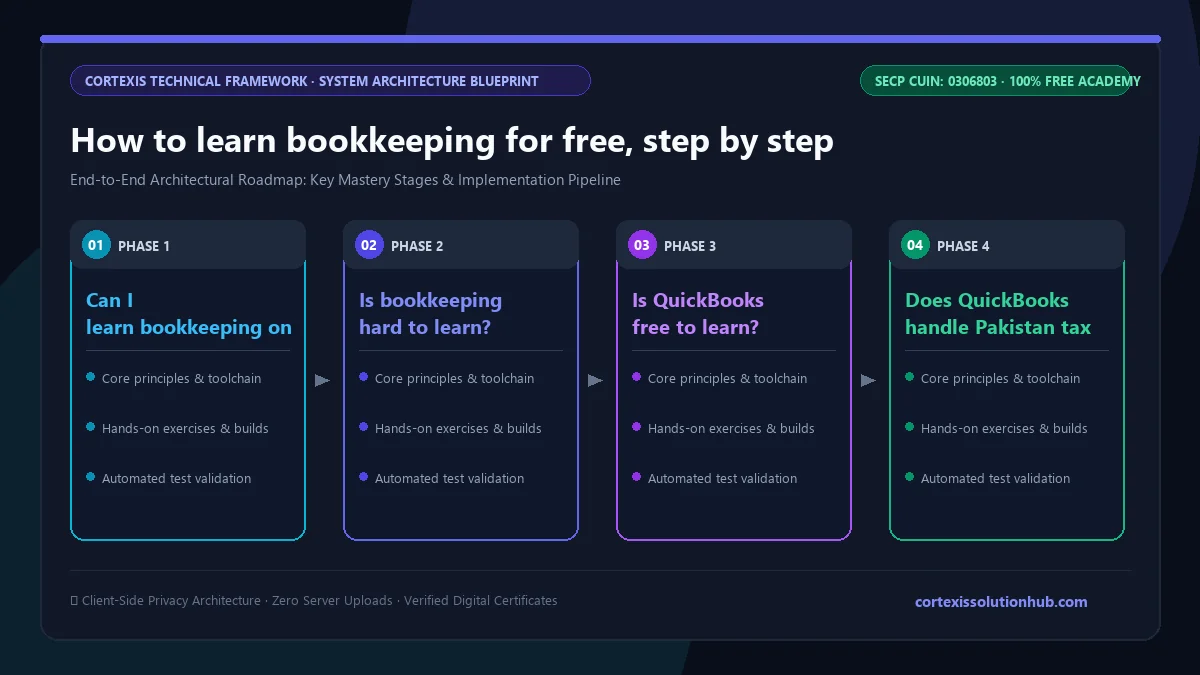
Figure 1: Complete step-by-step architectural workflow and technical execution stages for How to learn bookkeeping for free, step by step.
How to learn bookkeeping for free: the roadmap
Most people who quit bookkeeping quit at debits and credits, usually because they started in software. Software hides the double entry, which is convenient once you understand it and confusing until you do. Learn on paper or in a spreadsheet first.
Stage
What you learn
You are ready to move on when
1. Foundations
What a bookkeeper does, cash vs accrual basis, source documents
Every entry has a document behind it
2. Double entry
Assets, liabilities, equity, income, expenses, drawings, debits and credits
Ten transactions still balance
3. Structure
Chart of accounts, general journal, general ledger, trial balance
Software is stage eight, not stage one: QuickBooks runs the same ledger, only faster.
Step 1: Get the accounting equation into your bones
Assets equal liabilities plus equity. Every transaction a business makes keeps that equation in balance, and once that clicks, debits and credits stop being a memory test.
The best free practice is a tiny imaginary business. The course uses Bilal, who opens a mobile phone repair shop in Saddar, Karachi. Record each of his transactions, decide which two accounts it touches, apply the rule and check the totals. Then invent your own business, a bakery or a tuition centre, and do a whole month.
Forget what your bank means by "debit" and "credit". In bookkeeping they are just the two sides of an entry.
Step 2: Build the structure, then break it on purpose
Design a chart of accounts, journal your entries, post them to the ledger and run a trial balance. Then make mistakes on purpose: wrong side, transposed digits, half an entry. Knowing what each error does to a trial balance is what lets you fix a client's books later.
Step 3: Practise the boring, valuable work
Clients pay for repetitive work: recording sales, chasing late invoices, entering supplier bills, matching JazzCash and bank transactions, running petty cash. Practise the messy cases too: part payments, one transfer covering three invoices, bank charges deducted, or tax withheld by a corporate customer.
Give bank reconciliation the most attention. It is the most important check a bookkeeper performs, catching missing entries and duplicates before they reach a report.
Step 4: Learn period-end adjustments and the statements
Accruals, prepayments, deferred income, depreciation and inventory adjustments stop each month's profit depending on when cash happened to move. Self-taught bookkeepers often skip them, so learning them sets you apart.
Then read the three statements: the income statement (a video of a period), the balance sheet (a photograph of one date) and the cash flow statement, which explains how a profitable business can still run short of cash. Finish with a month-end close checklist you follow every month.
Step 5: Move into QuickBooks Online
QuickBooks Online is cloud accounting software from Intuit, sold as a monthly subscription. Plans and prices differ by country and change often, so check Intuit's own site for the current offer. For practice, you do not need to pay: free trials exist, and many bookkeepers open a free QuickBooks Online Accountant account, which includes a sample company.
Practise the settings that are hard to undo (home currency, multicurrency, the first month of the financial year, often July in Pakistan), then daily forms, bank feeds, bank rules and reconciliation. A bank feed does not replace reconciliation, because feeds can duplicate or miss lines.
A note on tax and payroll in Pakistan
Payroll and tax rules change with budgets and provincial law. A good bookkeeper does not memorise rates; they record what the documents show and check current rules with the relevant authority, such as FBR, EOBI or the provincial social security institution. Treat any rate in a tutorial, including ours, as an illustration.
What the free course covers, chapter by chapter
The Bookkeeping & QuickBooks course is rated Beginner to Intermediate and planned as six weeks of study. It has 12 chapters and 48 lessons:
What Bookkeeping Is and Why Businesses Need It: the job, bookkeeping vs accounting vs tax, cash and accrual basis, source documents.
The Accounting Equation and Double-Entry: assets, liabilities, equity, income, expenses, drawings, debits and credits, your first transactions.
Chart of Accounts, Journals and Ledgers: designing a chart, journal entries, posting, the trial balance and finding errors.
Sales, Invoices and Accounts Receivable: quotes, invoices, sales receipts, customer payments, credit notes, refunds, chasing late payers.
Purchases, Bills and Accounts Payable: purchase orders, supplier bills and payments, petty cash, aged payables, supplier statements.
Bank, Cash and Reconciliation: bank accounts and wallets, reconciliation, timing differences, transfers, loans and owner money.
Payroll Basics: employees vs contractors, gross to net pay, payroll journal entries, where compliance rules come from.
Adjustments and Period-End Entries: accruals, prepayments, deferred income, depreciation, inventory and cost of goods sold.
Financial Statements and Month-End Close: income statement, balance sheet, cash flow statement, a close checklist.
QuickBooks Online Setup and Daily Work: company file and settings, chart of accounts, lists, invoicing, payments and expenses.
QuickBooks Online Banking, Tax and Reports: bank feeds, bank rules, reconciliation, sales tax settings and key reports.
Working as a Bookkeeper: packaging and pricing services, finding clients locally and online, onboarding and cleaning up messy books, confidentiality and backups.
Each lesson ends with a short quiz, and you need 70 percent to pass it.
How long it takes to learn bookkeeping
The reading itself takes a few evenings, but the practice is the real work: recording, reconciling and closing a full month for an imaginary business, then doing it again in QuickBooks. With an hour most evenings, the planned six weeks is a fair target. Weekends only will take longer, and that is fine.
How the free certificate works
The course ends in a final exam: 50 questions, 60 minutes, and a pass mark of 50 out of 100. You get one timed attempt. If you do not pass, a retake opens 30 days later, with the same questions in a new order and the options shuffled. Leaving the page submits it, so pick a quiet hour. Pass, and the certificate is issued free.
The certificate shows you finished a structured course and passed a timed exam. It is not a professional qualification and will not replace ACCA, ICAP or a degree where those are required. We wrote more about this in are free online certificates worth anything. For freelance and small-business bookkeeping, what wins clients is a clean sample file and a reference from someone whose books you kept.
Mistakes to avoid
Starting with software. The first unusual transaction will stop you.
Skipping reconciliation. Unreconciled books look fine until they do not.
Recording a supplier payment as a new expense. Match it to the bill that is already in the books, or the cost is counted twice.
Giving tax advice. Record what the documents show and refer rate questions to a tax adviser or FBR guidance.
Weak security. You will handle salaries and bank statements. Use strong unique passwords, two-step login and regular backups, and never ask a client for their banking PIN.
Who this is for, and what to learn alongside it
It suits students wanting a practical skill, owners who want to understand their own numbers, and anyone after part-time or freelance work from home. Bookkeeping is a trust business: first clients usually come from people who know you.
Yes. Bookkeeping is rule based and very practical, which makes it well suited to self-study. The key is to practise on a made-up business after every topic rather than only reading, and to learn double entry before any software.
The arithmetic is simple. Debits and credits are the hard part, and they get easier once the accounting equation makes sense.
The course is free, and Intuit offers free trials and a free QuickBooks Online Accountant account with a sample company that you can practise in. Running real client books needs a paid subscription, usually paid by the client.
There is no Pakistan-specific edition at the time of writing, so tax rates are set up to match the business. Confirm current rates with FBR or a tax adviser.
It is planned as six weeks. The reading is the smaller part, and most of the time goes into practice, quizzes and the final exam.
Ready to start? Open the free [Bookkeeping & QuickBooks course](/learn/bookkeeping-quickbooks), begin with chapter one, and keep a practice business beside you the whole way.